



America the Many: A Review of Santenello's Your Fellow Americans
August 3, 2026
Peter Santenello
Simon and Schuster, August 4, 2026
For his four million subscribers, Saturday mornings have become a special occasion. That’s when YouTuber Peter Santenello drops his latest video documenting the most remote corners and cultures of the United States. Soon comments from all around the world pop up below thanking him for revealing yet another piece of the American mosaic. “As someone who lives in the other side of the globe (Cyprus) and is fascinated with rural America and its people, your videos are a real treat Peter!” goes one such comment.
Santenello makes his videos armed with nothing else than a GoPro, some clip mics, and his signature outfit: a baseball cap branded with the channel’s logo, a black t-shirt, performance pants, and sneakers. This has allowed his fans to spot him from far away as ever more wander into his videos telling him what great fans they are. There is much solace in this: It shows there is popular demand for minimalist hour-long content with single-camera shots in which regular Americans are allowed to share their perspectives uncensored. Highly flashy and overly editorialized cable news programs at the very most pull in half of Santenello’s numbers.
In his six years of content creation focused solely on the United States—before that he’d recorded mostly abroad—Santenello has released entire series on life in Amish country, Appalachia, native reservations, Cajun country, the Hamptons, and many other nooks. They’re a treat indeed.
In time for America’s 250th birthday, Santenello has now come out with his first book, aptly titled Your Fellow Americans: Dispatches from Across the Country We Call Home. Each chapter focuses on a different region, a distillation of his video content with some never before shown encounters rendered in literary form (right down to the acknowledgment at the start of the book that some moments of dialogue were re-created and some scenes “composites of events”).
Since the US wasn’t afforded a real national birthday blast and was subjected to yet another rambling rally by its Commander-in-Chief instead, Your Fellow Americans is the unabashedly patriotic birthday gift the nation was owed—if we look past a contradiction at the heart of Santenello’s outlook.
***
His is in many ways a typical kind of patriotism, driven by a genuine belief in what lies “deep inside the soul of Americans: independence, endurance, the belief in a better day tomorrow.”
This optimism was placed in Santenello’s cradle in rural Vermont. As a Gen Xer, he belonged to the last generation to enjoy what we might call a typical childhood, unplugged and unsupervised. As he recounts fondly in the book’s closing autobiographical chapter of his upbringing in the 80s and 90s,
the country felt like the open road—free and full of possibility. America was in this sweet spot where it had pushed through not all but a lot of its social issues. This was before the hypersensitivity of social media, before “going viral” could mean fame or ruin, before information silos divided groups of people.
From there he narrates a consequential road trip he took through America with his friend Steve after which Peter decided he didn’t want to take the traditional path of college, then office work. It was during the trip that he first learned how to get people to open up by treating them as warmly as he does on his channel, the secret to its success.
It’s what got him to get a skeptical Tribal Council woman of the Siberian Yupik people on Alaska’s mostly privately owned Saint Lawrence Island to grant him the permit to film there, the setting of one of the book’s chapters. The island is located in the Bering Strait, just off the Russian coast, “one thousand miles closer to Moscow” than to Washington, DC, and yet still US soil. There are Yupiks in Russia and until the 1990s Russian and American Yupiks would come together to celebrate their shared ancestry. Though Santenello wonders “if long-standing cultural ties always outweighed the national cultures layered on top of them.” After all, if the Yupik festival were taken up again today, “some of its visitors would probably only speak Russian.”
Instead, the Alaskan Yupiks shared something quite crucial with the rest of the country. Despite the island’s remoteness, its brutal winters, its traditional whale-hunting expeditions, the Yupiks’ Asiatic appearance, “the same flag flew above my hometown as here,” Santenello realizes. “I used to not think of the flag as such an important visual.” But not so anymore: “anywhere the flag flies is just as American as wherever we’re from.”
Maybe. In a narrowly defined civic-nationalist kind of way perhaps.
But the nostalgic appeal of Santenello’s videos and now book lie in exposing us to the pockets of old-stock American cultures that still withstand the forces of 21st century homogenization. Like Keith and Tara, a couple that lives in the Louisiana Bayou and still speak Cajun French; Jerry, a crab fisherman who lives on Smith Island in the Chesapeake Bay and who still speaks a dialect that shows similarities with Elizabethan English; or the Appalachian teen that he stumbles upon with his usual good fortune and who proudly recounts his Confederate ancestors’ Civil War engagements.
Are they all the same?
That America was one single nation, maybe even a revolutionary idea more so than some kind of European-style nation state is a notion of fairly modern vintage, at most as old as its first imperial adventures at the end of the 19th century. Before that, as the historian David Hackett Fischer showed in his brilliant book Albion’s Seed (1989), regional identities dominated and a New England Yankee hated no one more than a tidewater Virginian gentleman while the Quaker-founded culture of the Delaware Valley tried to establish a more tolerant political culture squeezed between the two (to this day Pennsylvania remains a decisive swing state). And all groups were glad that the violent Scots-Irish lived far away in remote mountain hollers
Secessionist movements could be found anywhere and dated back to near the founding of the country and not just 1861. That the United States was even held together at all cost the lives of hundreds of thousands of its men during the Civil War and a succession of ever changing regional coalitions who were able to triangulate their interests in pursuit of elusive Congressional majorities.
Fischer showed that these regional cultures survived well into the late 20th century and, according to the journalist Colin Woodard’s book American Nations (2011), still continue to determine regional voting patterns and cultural preferences. The only difference is that where Fischer saw four fundamentally opposed “British folkways” as having made up the core groups of the young American republic, Woodard identified as many as eleven distinct nations, not all of Anglo-Saxon origin.
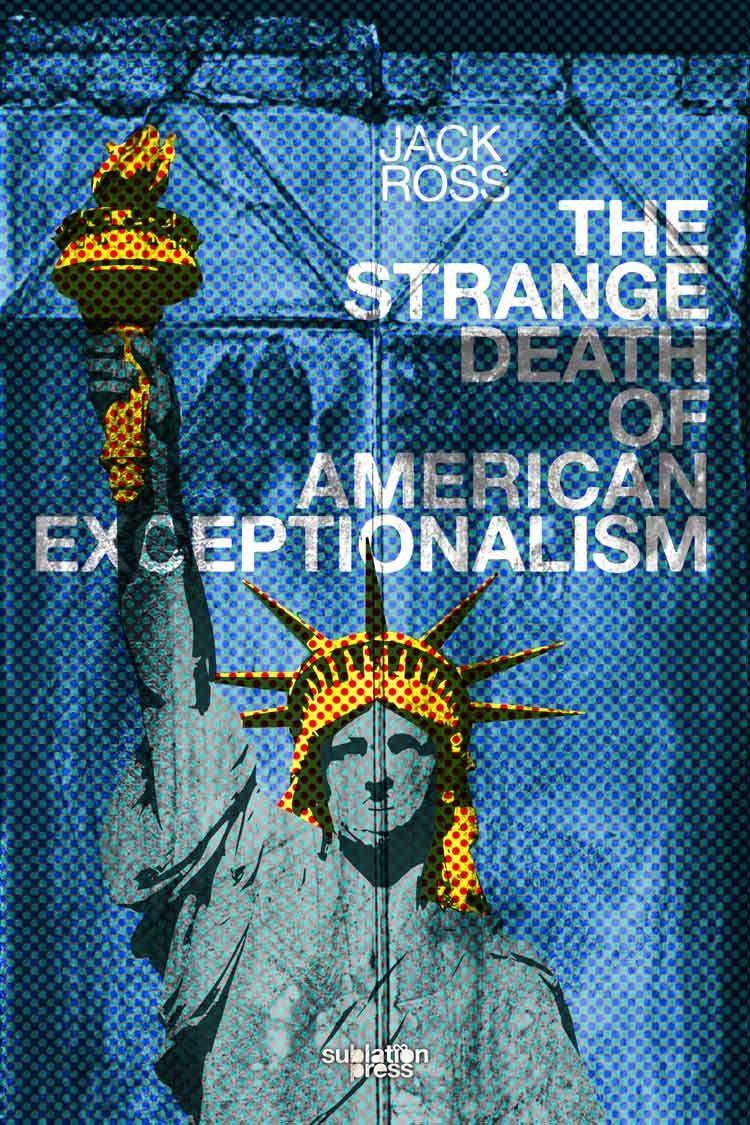
In that sense, the culture wars of our day aren’t mere disagreements over policy views, no matter how passionately held; nor are they simply defined by class. Rather, they’re the latest iteration of Puritan Yankee versus Cavalier Southerner versus Deep Southerner versus North English borderer-descended Appalachians, an argument laid out as recently as by Sublation Media author Jack Ross in The Strange Death of American Exceptionalism (2024). In other words, the political fault lines of today stem from inherited and thereby unconsciously held cultural traditions. That’s why the discourse takes on such moralizing, us-versus-them tones.
Traveling as widely as he does, Santenello grasps this more than most. “I’ve often heard people say that America has no culture,” he writes, “and I think that claim couldn’t be more off. Sure, America doesn’t have one neat, homogeneous culture—it’s too mixed, too big, too complicated for that. What it does have is a whole host of cultures sprinkled across its vast and beautiful geography.”
Indeed. But then he goes on: “That’s the true gift of this country: You can choose the life you want to live, in the culture that feels right to you.”
And certainly, that Americans move toward where like-minded people live has been diagnosed by the journalist Bill Bishop in the 2008 book The Big Sort as well.
But if culture runs so deep, can you truly fit in with another, simply as a matter of personal preference? The people Santenello interviews certainly fear the opposite—that, for example, a swarm of coastal California escapees will transform the regions that they move to in their image.
Along with that comes the often expressed worry that their cultures might just succumb to modernization, to the standardized dialect of TikTok influencers, to the pull of urban hubs where desk jobs promise relief from the hardship of rural work.
The journalist Michael Lind called the challenge to American regional cultures “a truly epochal development” in a 2021 essay. Where “until the late 20th century, the American elite was divided among regional oligarchies,” Lind writes, in the last generation “these regional patriciates have been absorbed into a single, increasingly homogeneous national oligarchy, with the same accent, manners, values, and educational backgrounds from Boston to Austin and San Francisco to New York and Atlanta.”
***
The people in Santenello’s videos would agree that whatever this oligarchy has to offer, they want none of that.
But he also points out that it might not be as simple as that. The Yupik people may hold on to their ways, but that with some help from federal health care and food subsidies; the Bayou may be endangered by rising sea levels, but where Keith and Tara live is a man-made canal anyway, cut by the regionally dominant oil industry—"rural and urban worlds dependent on one another for survival in indirect and unconscious ways.”
Santenello visits urban centers in his videos too, but in typical fashion prefers to talk to the people of the deepest ghetto more than geographically mobile tech workers in the glass skyscrapers.
And after the latest Saturday morning video drop you can hear from them directly too.
.png)

.png)


.png)
.png)


